
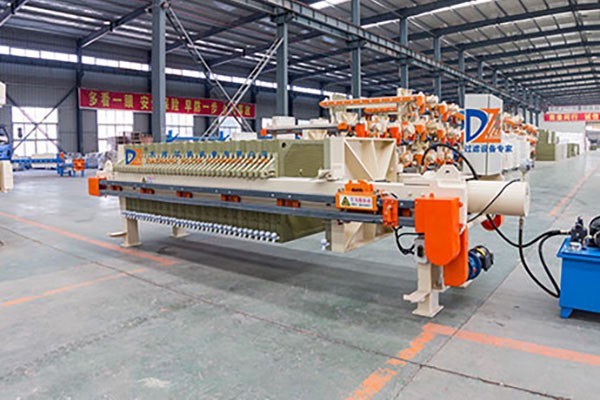
Membrane Filter Press
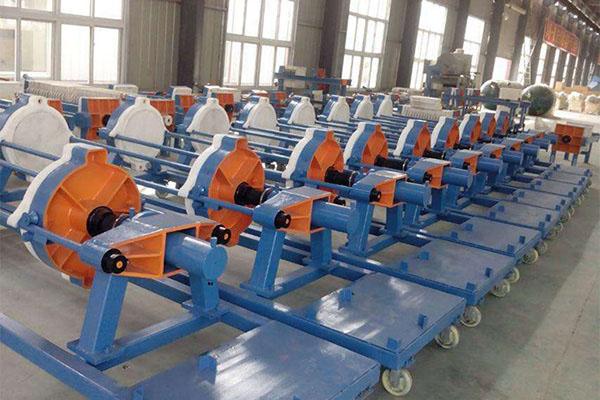
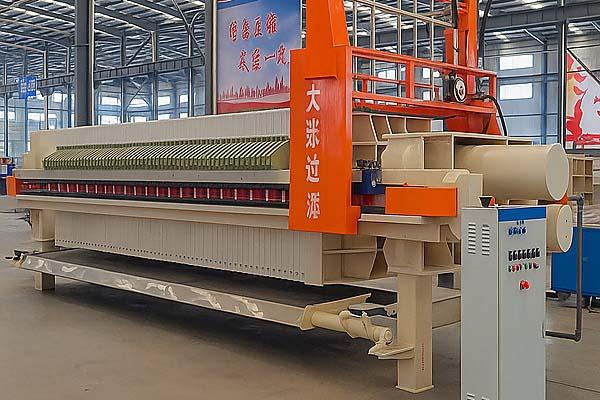
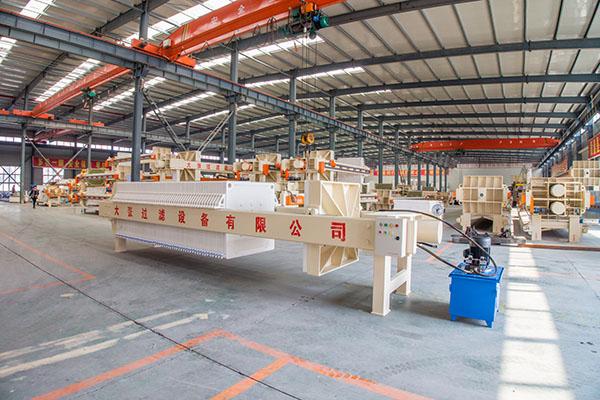
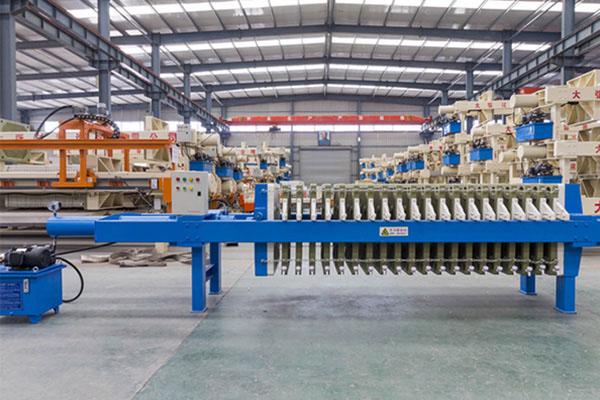
Dazhang manufactures membrane filter presses for deep sludge dewatering and solid-liquid separation. Filter areas from 30–1000 m² with membrane squeezing and automatic configurations.
- 30-1000
- 870、1000、1250、1500、2000
- Auto/Semi-automatic/Manual
- Quick Open, etc.
- 0.8-4.0
- Visible/Invisible
- Description
- Specifications
- Video
What Is a Membrane Filter Press?
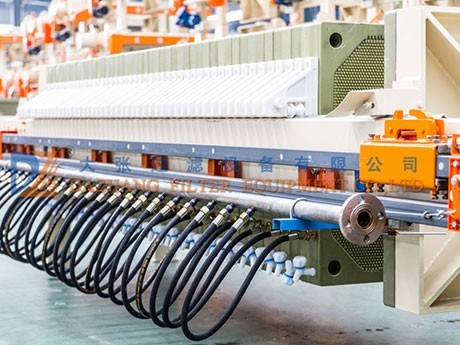
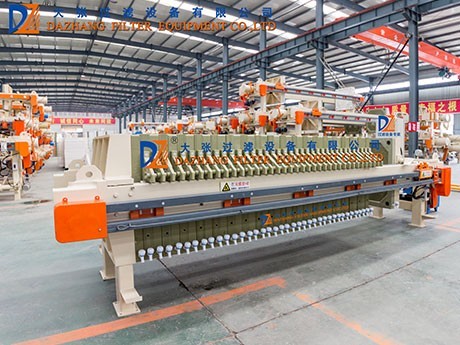
A membrane filter press is an industrial solid-liquid separation system with an additional filter cake squeezing stage. Unlike a conventional chamber filter press, the membrane plates expand after the chambers are filled, using water or compressed air to apply additional pressure to the filter cake.
This secondary squeezing process removes more residual liquid from the cake, helping to achieve lower cake moisture and, for many materials, a shorter dewatering cycle.
Key Advantages
Lower Filter Cake Moisture
Shorter Filtration Cycle
Higher Liquid Recovery
More Uniform and Compact Filter Cake
Suitable for Difficult-to-Dewater Slurries
Lower Downstream Treatment Costs
Chamber vs. Membrane Filter Press: Which One Should You Choose?
Chamber and membrane filter presses are widely used for solid-liquid separation and industrial sludge dewatering, but they differ in dewatering method, equipment cost, operating requirements, and final filter cake moisture. The right choice depends on the characteristics of the slurry, required processing capacity, target cake dryness, and overall operating costs.
| Parameter | Chamber Filter Press | Membrane Filter Press |
|---|---|---|
| Dewatering Principle | Slurry filtration and filter cake formation are mainly achieved by the feed pressure generated by the slurry pump. | After the initial filtration cycle, the filter cake is further compressed by membrane squeezing to remove additional moisture. |
| Filter Cake Moisture | Provides reliable dewatering performance for most standard industrial filtration applications. | Typically produces a drier filter cake with lower residual moisture, making it suitable for applications with strict cake dryness requirements. |
| Equipment Cost | Generally has a lower initial investment due to its simpler plate design and fewer auxiliary components. | Usually requires a higher initial investment because of the membrane filter plates and additional squeezing system. |
| Maintenance | A simpler mechanical structure makes operation, inspection, and routine maintenance easier. | Requires additional inspection and maintenance of the membrane plates, squeezing system, and related control components. |
| Automation | Can be equipped with PLC control, automatic plate shifting, filter cloth washing, cake discharge, and sludge conveying systems. | Supports the same automation options, with additional control of the membrane squeezing cycle for more precise dewatering. |
| Recommended When | Reliability, simple operation, lower capital investment, and stable long-term performance are the main priorities. | Lower filter cake moisture is required to reduce downstream drying, transportation, storage, or disposal costs. |
Which Filter Press Is Best for Your Application?
If your process requires reliable solid-liquid separation, simple operation, easy maintenance, and optimized capital investment, a chamber filter press is often the most practical and cost-effective solution. If your priority is to achieve a drier filter cake, improve dewatering efficiency, and reduce downstream costs for drying, transportation, or disposal, a membrane filter press is usually the better choice.
Application Areas
Typical industries and materials:
- Environmental Sludge Treatment: Used for deep dewatering of municipal and industrial sludge, reducing transportation and landfill costs.
- Mining and Metallurgy: Used for deep dewatering of tailings and concentrates, improving mineral recovery rates.
- Chemical Industry: Used for recovering high-value products or catalysts, improving product purity.
- Food & Pharmaceutical: Used for high-standard sanitary solid-liquid separation processes.
- Building Materials & Ceramics: Used for slurry dewatering, improving forming efficiency.
Selection Notes (Limitations)
- Higher Initial Investment: Membrane filter presses require higher upfront investment due to the specialized membrane plates.
- Additional Energy Requirement: Secondary squeezing requires compressed air or high-pressure water supply.
- System Complexity: Control systems are more advanced compared to standard plate filter presses.
Frequently Asked Questions About Membrane Filter Presses:
1. How does a membrane filter press work?
The filtration cycle typically involves plate closing, slurry feeding, filtration, membrane squeezing, pressure release, plate opening, and filter cake discharge. During filtration, solid particles are retained within the filter chambers, while the filtrate passes through the filter cloth. Once the chambers are filled, the membrane plates expand and compress the filter cake to further reduce its moisture content.
2. What is the difference between a membrane filter press and a chamber filter press?
A chamber filter press primarily relies on feed pressure to dewater the slurry, whereas a membrane filter press includes an additional squeezing stage after the chambers are filled. Membrane filter presses are generally preferred when lower cake moisture, shorter filtration cycles, or higher throughput are required, or when processing materials that are difficult to dewater. Chamber filter presses are often a more cost-effective option for standard filtration applications.
3. Can a membrane filter press be used for dewatering in the mining industry and for tailings processing?
Yes. Membrane filter presses are widely used in the mining and mineral processing industries for dewatering tailings and filtering concentrates.Typical materials include gold tailings, copper concentrates, iron ore tailings, zinc concentrates, coal slurry, kaolin, and other mineral slurries. The system can be customized based on particle size, slurry concentration, required throughput, and target cake moisture content.
4. How do I choose the right size membrane filter press?
The selection should be based on the material to be filtered, slurry volume, solids concentration, required throughput, target cake moisture content, filtration cycle, operating hours, and available installation space. Filtration area and chamber volume are particularly important. Providing these process parameters allows our engineers to recommend the appropriate filter press model and configuration.
5. Can a membrane filter press operate automatically?
Yes. Membrane filter presses can be supplied with various levels of automation. Automated systems can include hydraulic plate closing, automatic pressure regulation, automatic plate shifting, cake discharge, filter cloth washing, drip trays, slurry feed control, and PLC-based control. The level of automation can be tailored to the production process and labor requirements.
Specification
| Model | Area (m²) | Plate size (mm) | Cake thickness (mm) | Filter chamber volume (L) | Plate Qty (pcs) | Filtration pressure (MPa) | Motor Power (Kw) | Weight (Kg) | Dimensions (L×W×H mm) | Foundation Size (mm) | |||
|---|---|---|---|---|---|---|---|---|---|---|---|---|---|
| XAG10/630-U | 10 | 630×630 | ≤30 | 157 | 17 | 1 | 2.2 | 1765 | 3295×850×942 | 2294 | 490 | 900 | 627 |
| XAG15/630-U | 15 | 235 | 25 | 2038 | 3775×850×942 | 2774 | |||||||
| XAG20/630-U | 20 | 314 | 33 | 2311 | 4255×850×942 | 3254 | |||||||
| XAG30/630-U | 30 | 471 | 49 | 2858 | 5215×850×942 | 4214 | |||||||
| XAMG30/870-U | 30 | 870×870 | ≤35 | 498 | 23 | 0.8-4.0 | 4 | 3046 | 3815×1430×1230 | 2920 | 700 | 1270 | 785 |
| XAMG40/870-U | 40 | 623 | 29 | 3593 | 4200×1430×1230 | 3300 | |||||||
| XAMG50/870-U | 50 | 789 | 37 | 4057 | 4715×1430×1230 | 3820 | |||||||
| XAMG60/870-U | 60 | 955 | 45 | 4597 | 5235×1430×1230 | 4340 | |||||||
| XAMG70/870-U | 70 | 1121 | 53 | 5136 | 5755×1430×1230 | 4860 | |||||||
| XAMG80/870-U | 80 | 1287 | 61 | 5636 | 6275×1430×1230 | 5380 | |||||||
| XAMG50/1000-U | 50 | 1000×1000 | 776 | 27 | 4352 | 4385×1570×1380 | 3420 | 780 | 1400 | 870 | |||
| XAMG60/1000-U | 60 | 943 | 33 | 4480 | 4885×1570×1380 | 3850 | |||||||
| XAMG70/1000-U | 70 | 1109 | 39 | 5263 | 5245×1570×1380 | 4280 | |||||||
| XAMG80/1000-U | 80 | 1275 | 45 | 5719 | 5675×1570×1380 | 4710 | |||||||
| XAMG100/1000-U | 100 | 1608 | 57 | 6555 | 6525×1570×1380 | 5560 | |||||||
| XAMG120/1000-U | 120 | 1941 | 69 | 7466 | 7375×1570×1380 | 6410 | |||||||
| XAMG80/1250-U | 80 | 1250×1250 | ≤40 | 1560 | 29 | 5.5 | 10900 | 5080×1840×1630 | 3990 | 850 | 1740 | 995 | |
| XAMG100/1250-U | 100 | 1975 | 37 | 11750 | 5690×1840×1630 | 4600 | |||||||
| XAMG120/1250-U | 120 | 2391 | 45 | 12600 | 6310×1840×1630 | 5210 | |||||||
| XAMG150/1250-U | 150 | 2911 | 55 | 13620 | 7070×1840×1630 | 5980 | |||||||
| XAMG160/1250-U | 160 | 3119 | 59 | 14470 | 7380×1840×1630 | 6285 | |||||||
| XAMG200/1250-U | 200 | 3847 | 73 | 15320 | 8450×1840×1630 | 7355 | |||||||
| XAMG240/1250-U | 240 | 4679 | 89 | 16170 | 9670×1840×1630 | 8580 | |||||||
| XAMG250/1250-U | 250 | 4783 | 91 | 17020 | 9820×1840×1630 | 8730 | |||||||
| XAMG200/1500-U | 200 | 1500×1500 | 3809 | 49 | 11 | 26120 | 7140×2200×1820 | 5920 | 1170 | 1990 | 1070 | ||
| XAMG250/1500-U | 250 | 4723 | 61 | 26930 | 7730×2200×1820 | 6910 | |||||||
| XAMG300/1500-U | 300 | 5637 | 73 | 28160 | 8200×2200×1820 | 7900 | |||||||
| XAMG350/1500-U | 350 | 6551 | 85 | 29600 | 10110×2200×1820 | 9090 | |||||||
| XAMG400/1500-U | 400 | 7618 | 99 | 31500 | 11260×2200×1820 | 10240 | |||||||
| XAMG450/1500-U | 450 | 8532 | 111 | 33400 | 12250×2200×1820 | 11230 | |||||||
| XAMG500/1500-U | 500 | 9446 | 123 | 33380 | 13240×2200×1820 | 12220 | |||||||
| XAMG600/2000-U | 600 | 2000×2000 | 11901 | 85 | 15 | 48840 | 11820×2750×2400 | 10105 | 1530 | 2500 | 1400 | ||
| XAMG700/2000-U | 700 | 13838 | 99 | 52640 | 13031×2750×2400 | 11316 | |||||||
| XAMG800/2000-U | 800 | 15960 | 113 | 56440 | 14242×2750×2400 | 12537 | |||||||
| XAMG900/2000-U | 900 | 17713 | 127 | 60240 | 15453×2750×2400 | 13738 | |||||||
| XAMG1000/2000-U | 1000 | 19651 | 141 | 64040 | 16664×2750×2400 | 14949 | |||||||