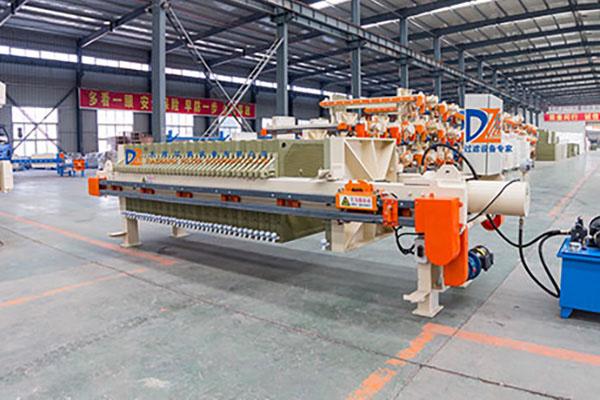

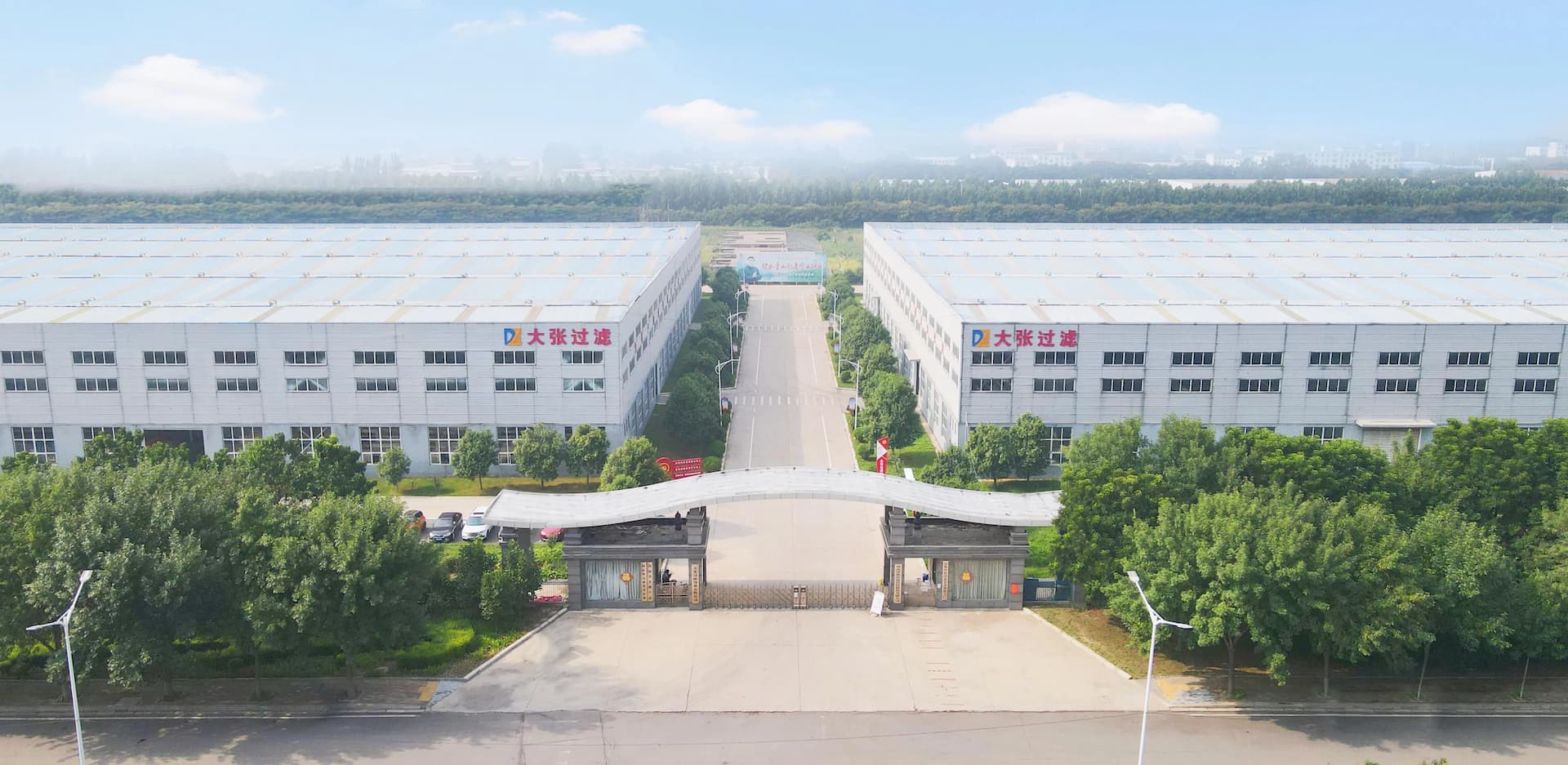
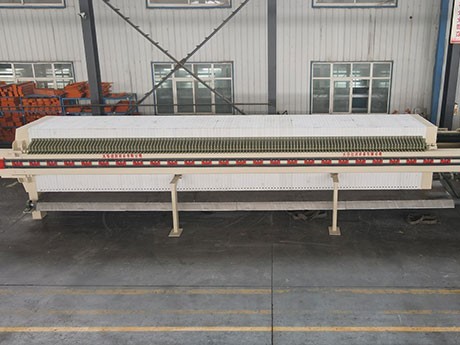
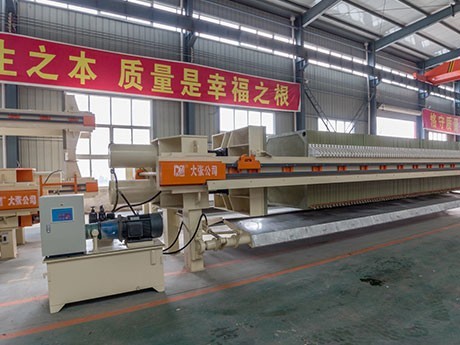
Chamber Filter Press
DaZhang manufactures chamber filter presses for sludge, wastewater and mining dewatering. 30–1000 m² filtration area, automatic options and custom engineering. Request a quote.
- 30-1000
- 870、1000、1250、1500、2000
- Auto/Semi-automatic/Manual
- Quick Open, etc.
- 0.6-4.0
- Visible/Invisible
- Description
- Specifications
- Video
What Is a Chamber Filter Press?
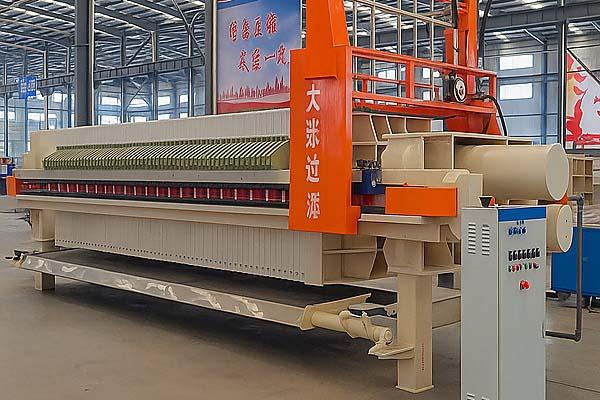
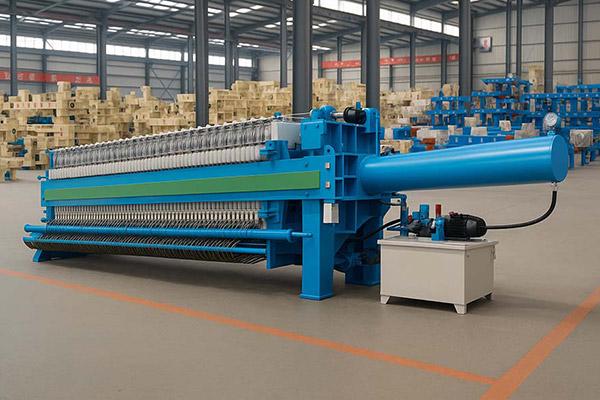
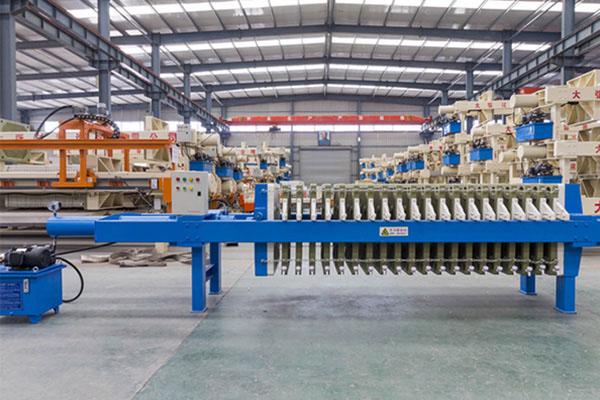
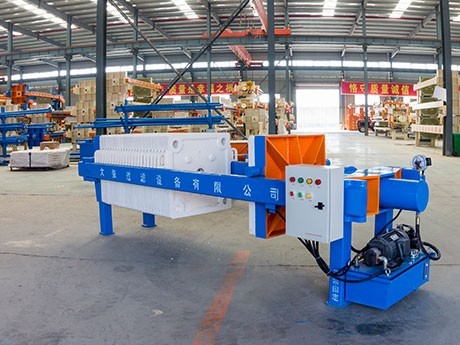
A chamber filter press is an industrial batch filtration system designed for solid-liquid separation under pressure. It is widely used for sludge dewatering, wastewater treatment, mineral slurry processing, and filtration applications in the chemical, metallurgical, ceramic, and other industries.
When the filter plates are hydraulically closed, the recessed plates form sealed filtration chambers. During filtration, the liquid passes through the filter cloth and is discharged as filtrate, while solid particles are retained inside the chambers and gradually form a filter cake.
Key Advantages
High Filtration Efficiency
Robust and Durable Structure
Cost-Effective Solution
Easy Operation and Maintenance
Optional Automation
Chamber or Membrane Filter Press: Which One to Choose?
Chamber and membrane filter presses are used for separating solid and liquid phases, but they differ in the method of cake dewatering, equipment cost, and operating requirements. The optimal choice depends on the characteristics of the slurry, the required throughput, and the acceptable residual moisture content of the filter cake.
| Parameter | Chamber Filter Press | Membrane Filter Press |
|---|---|---|
| Dewatering Principle | Filtration and cake formation occur mainly under the pressure used to feed the slurry. | After the initial filtration stage, the cake undergoes additional membrane squeezing. |
| Cake Moisture | Suitable for most standard industrial dewatering applications. | Generally allows for a drier cake and lower residual moisture content. |
| Equipment Cost | Usually lower due to a simpler design and fewer additional components. | Higher due to the use of membrane plates and an additional squeezing system. |
| Maintenance | The simpler design makes operation and maintenance easier. | Additional inspection and maintenance of the membrane plates and squeezing system are required. |
| Automation | PLC control, automatic plate shifting, filter cloth washing, and cake conveying systems are available. | Supports similar functions with additional control of the membrane squeezing process. |
| Recommended When | Reliability, ease of operation, and lower initial investment are the main priorities. | Maximum reduction of residual cake moisture is required to lower subsequent drying, transportation, or disposal costs. |
Which Filter Press Is Right for Your Process?
If your production process prioritizes a simple design, stable operation, and optimized capital costs, a chamber filter press is usually a practical solution. If the main objective is to achieve a drier filter cake and reduce the cost of subsequent processing, a membrane filter press is recommended.
Application Areas
Typical industries and materials:
- Wastewater and Sludge Treatment: Used for municipal and industrial sludge dewatering.
- Mining and Metallurgy: Used for dewatering mineral slurries, tailings, and concentrates.
- Chemical Industry: Used for separating pigments, dyes, catalysts, and chemical products.
- Food Industry: Used for syrup, starch, and partial liquid clarification.
- Building Materials and Ceramics: Used for slurry dewatering and wastewater recovery.
Selection Notes (Limitations)
- This equipment operates intermittently: The box filter press requires periodic operations such as feeding, filtering, and discharging, making continuous production impossible. Consequently, its efficiency is limited in high-flow or continuous production scenarios.
- Limited dewatering capacity: Without a secondary membrane pressing function, the moisture content of the filter cake typically exceeds that of membrane filter presses. Performance remains relatively average when processing high-viscosity, fine-particle, or difficult-to-dewater materials.
- Persistent manual labor and maintenance requirements: While automatic plate extraction is achievable, filter cloth cleaning, replacement, and equipment maintenance still necessitate regular manual intervention. Additionally, the substantial equipment size imposes certain installation space constraints.
Frequently Asked Questions About Chamber Filter Presses:
1. How to choose the right chamber filter press model?
To select the right model, please provide the material name, solids content, processing capacity, daily operating hours, and required filter cake moisture content. Our engineers will recommend the appropriate filtration area, plate size, and configuration.
2. What information should be provided before receiving a quotation?
Please provide the slurry type, solids content, daily processing capacity, feed pressure requirements, desired filter cake moisture content, site conditions, and required level of automation. Photos or material test reports will also be helpful.
3. Can a chamber filter press operate in fully automatic mode?
Yes. A chamber filter press can be equipped with an automatic plate shifting system, automatic drip tray, filter cloth washing system, conveyor, hydraulic system, and PLC-based control system according to project requirements.
4. What is the difference between a chamber filter press and a membrane filter press?
A chamber filter press mainly uses feed pressure for filtration and dewatering. A membrane filter press additionally uses a secondary squeezing process, which can help reduce filter cake moisture content and shorten the filtration cycle in certain applications.
5. In which industries can chamber filter presses be used?
Chamber filter presses are widely used in industrial wastewater treatment, mining tailings processing, chemical processing, ceramics, metallurgy, food processing, printing and dyeing, pharmaceutical production, and environmental protection.
Specification
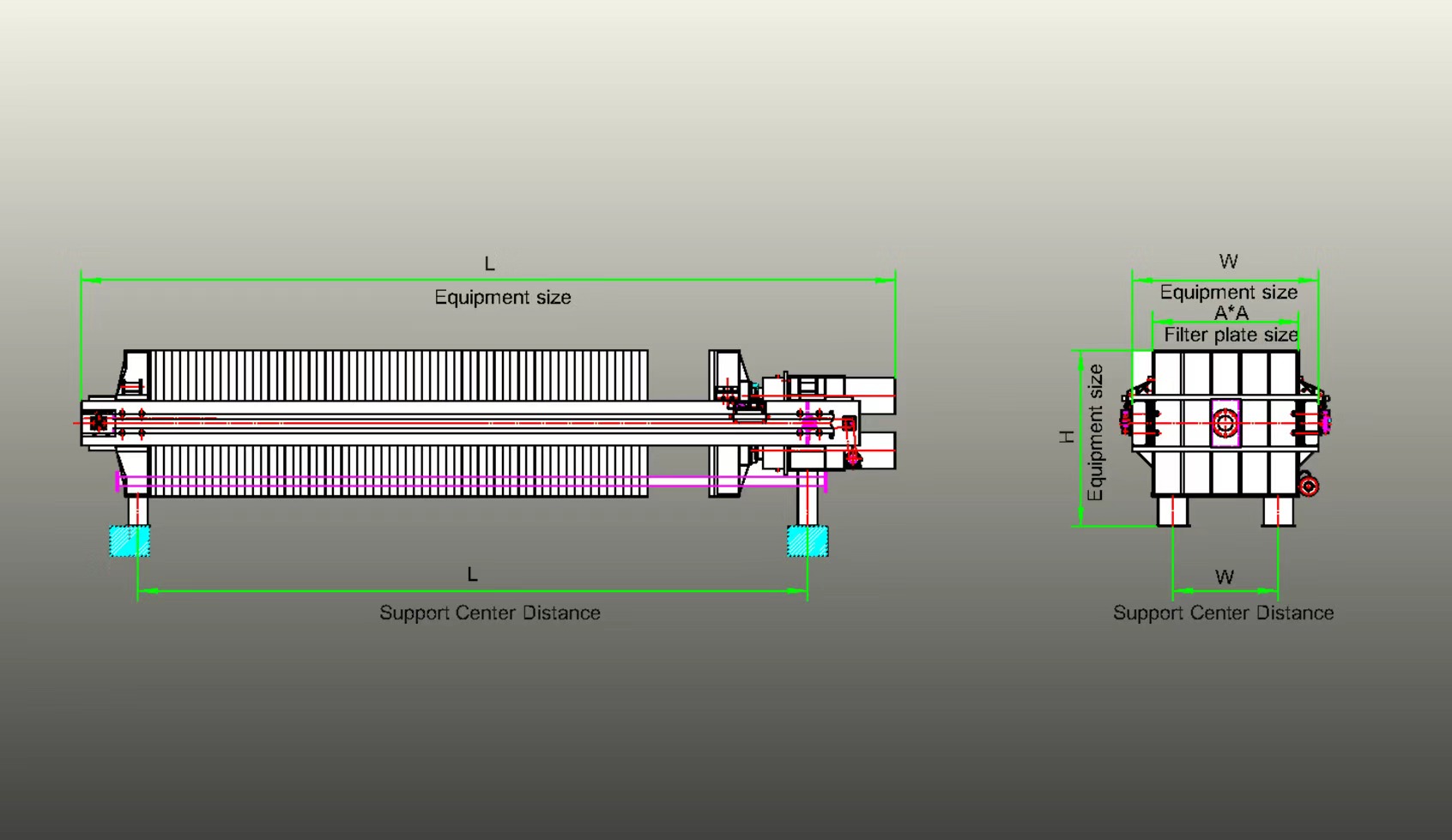
| Model | Area (m²) | Plate size (mm) | Cake thickness (mm) | Filter chamber volume (L) | Plate Qty (pcs) | Filtration pressure (MPa) | Motor Power (Kw) | Weight (Kg) | Dimensions (L×W×H mm) | Foundation Size (mm) | |||
|---|---|---|---|---|---|---|---|---|---|---|---|---|---|
| XAMZ30/870-30U | 30 |
870×870 Or 800×800 |
30 | 460 | 23 | 0.6-4.0 | 2.2 | 2680 | 3465×1465×1230 | 2360 | 700 | 1380 | 785 |
| XAMZ40/870-30U | 40 | 595 | 30 | 3050 | 3855×1465×1230 | 2750 | |||||||
| XAMZ50/870-30U | 50 | 748 | 38 | 3456 | 4395×1465×1230 | 3290 | |||||||
| XAMZ60/870-30U | 60 | 902 | 46 | 4003 | 4835×1465×1230 | 3730 | |||||||
| XAMZ70/870-30U | 70 | 1056 | 54 | 4584 | 5275×1465×1230 | 4170 | |||||||
| XAMZ80/870-30U | 80 | 1210 | 62 | 5082 | 5715×1465×1230 | 4610 | |||||||
| XAMZ50/1000-30U | 50 | 1000×1000 | 736 | 28 | 4 | 4128 | 4290×1580×1380 | 3120 | 780 | 1480 | 870 | ||
| XAMZ60/1000-30U | 60 | 889 | 34 | 4636 | 4710×1580×1380 | 3480 | |||||||
| XAMZ70/1000-30U | 70 | 1041 | 40 | 5143 | 5010×1580×1380 | 3840 | |||||||
| XAMZ80/1000-30U | 80 | 1193 | 46 | 5651 | 5370×1580×1380 | 4200 | |||||||
| XAMZ100/1000-30U | 100 | 1475 | 57 | 6628 | 6030×1580×1380 | 4860 | |||||||
| XAMZ120/1000-30U | 120 | 1777 | 69 | 7644 | 6750×1580×1380 | 5580 | |||||||
| XAMZ100/1250-30U | 100 | 1250×1250 | 30 | 1468 | 36 | 8307 | 5430×1900×1630 | 3970 | 850 | 1740 | 995 | ||
| XAMZ120/1250-30U | 120 | 1746 | 43 | 9308 | 5880×1900×1630 | 4430 | |||||||
| XAMZ150/1250-30U | 150 | 2250 | 55 | 11000 | 6400×1900×1630 | 5210 | |||||||
| XAMZ160/1250-30U | 160 | 2341 | 58 | 11492 | 6860×1900×1630 | 5400 | |||||||
| XAMZ180/1250-30U | 180 | 2619 | 65 | 12494 | 7315×1900×1630 | 5860 | |||||||
| XAMZ200/1250-30U | 200 | 2896 | 72 | 13504 | 7770×1900×1630 | 6310 | |||||||
| XAMZ220/1250-30U | 220 | 3214 | 80 | 14652 | 8290×1900×1630 | 6830 | |||||||
| XAMZ250/1250-30U | 250 | 3650 | 91 | 16227 | 9010×1900×1630 | 7550 | |||||||
| XAMZ200/1500-30U | 200 | 1500×1500 | 35 | 3500 | 49 | 11 | 20030 | 6570×2200×1820 | 5250 | 1170 | 1990 | 1070 | |
| XAMZ250/1500-30U | 250 | 4375 | 61 | 22978 | 7395×2200×1820 | 6090 | |||||||
| XAMZ300/1500-30U | 300 | 5250 | 74 | 26026 | 8300×2200×1820 | 6990 | |||||||
| XAMZ350/1500-30U | 350 | 6125 | 86 | 29220 | 9120×2200×1820 | 7840 | |||||||
| XAMZ400/1500-30U | 400 | 7000 | 99 | 32574 | 10050×2200×1820 | 8750 | |||||||
| XAMZ450/1500-30U | 450 | 7875 | 111 | 35586 | 10860×2200×1820 | 9590 | |||||||
| XAMZ500/1500-30U | 500 | 8750 | 123 | 38606 | 11730×2200×1820 | 10430 | |||||||
| XAMZ600/2000-30U | 600 | 2000×2000 | 40 | 12000 | 85 | 15 | 49000 | 11100×3000×2500 | 9200 | 1660 | 2000 | 1050 | |
| XAMZ700/2000-30U | 700 | 14000 | 99 | 53000 | 12200×3000×2500 | 10300 | |||||||
| XAMZ800/2000-30U | 800 | 16000 | 113 | 57000 | 13350×3000×2500 | 11450 | |||||||
| XAMZ900/2000-30U | 900 | 18000 | 127 | 61000 | 14500×3000×2500 | 12600 | |||||||
| XAMZ1000/2000-30U | 1000 | 20000 | 141 | 65000 | 15600×3000×2500 | 13830 | |||||||
Details page