
Laboratory Filter Press
- 0.32
- 3+1+1、5+1+1
- Auto/Manual
- Quick Open, etc.
- 0.6
- Visible/Invisible
- Description
Description
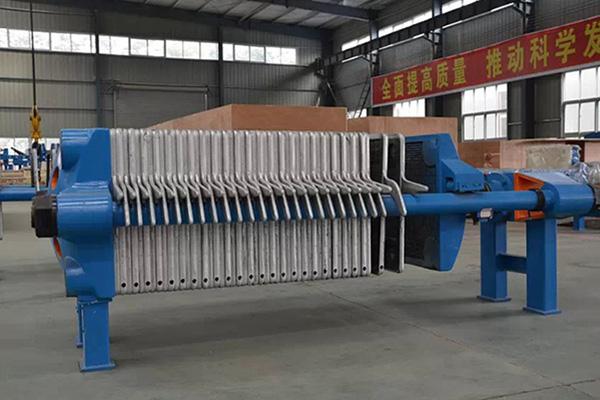
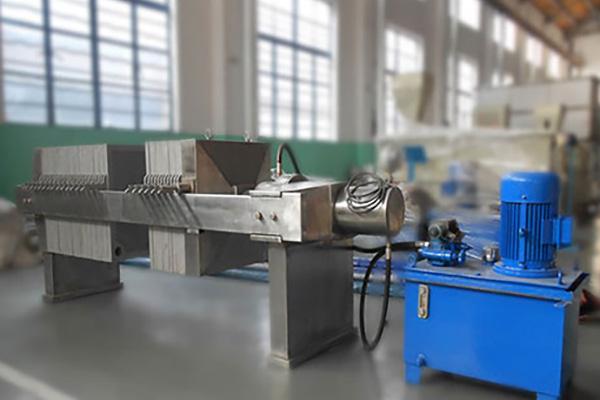
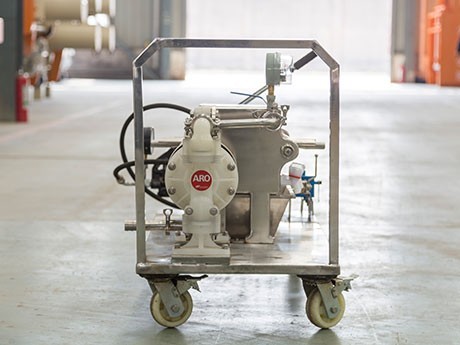
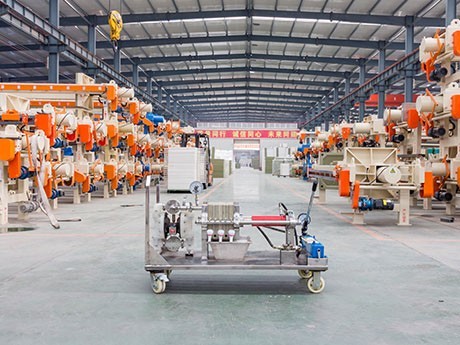
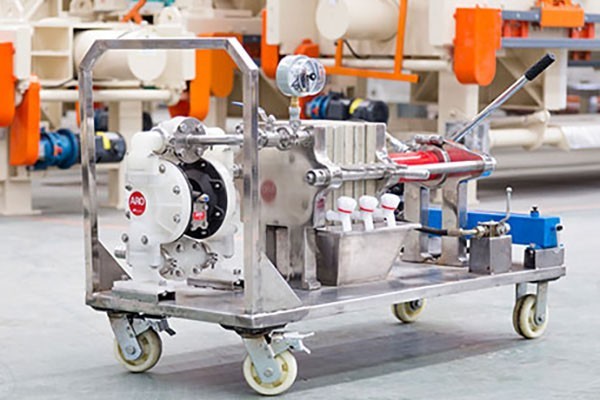
The laboratory filter press is a compact solid-liquid separation unit designed for small-volume filtration tests, slurry evaluation and laboratory process development. It reproduces the basic filtration principle of an industrial filter press on a much smaller scale, allowing users to evaluate material filtration behavior before selecting or scaling up to larger production equipment.
With a filtration area of 0.32 m², the laboratory filter press requires only a small quantity of slurry for each test. This makes it suitable for new material trials, sludge dewatering tests, filter cloth comparison and preliminary process optimization when only limited samples are available.
The equipment adopts an integrated and compact design for convenient laboratory use and movement. Different operating and filtrate discharge configurations are available, allowing the test conditions to be adjusted according to the characteristics of the slurry and the purpose of the filtration experiment.
Why Use a Laboratory Filter Press
Industrial filter press selection depends strongly on slurry characteristics. Particle size, solids concentration, viscosity, compressibility and filter cake structure can all influence filtration speed and final cake condition. Testing the actual material on a laboratory filter press provides practical filtration data before determining the configuration of a larger machine.
Small-scale testing can also be used to compare different filter cloths and operating conditions. By observing filtrate clarity, filtration time, cake formation and cake discharge behavior, users can better understand how the material performs during pressure filtration.
Main Features
- Compact laboratory design requiring only a small amount of test material;
- Integrated construction for convenient movement and operation without complicated on-site installation;
- Interchangeable filter cloth allows different filtration media to be evaluated with the same slurry;
- Working principle is similar to a conventional industrial filter press, making it suitable for preliminary filtration and scale-up studies.
Working Principle
During a test, the filter plates are closed and the prepared slurry is fed into the filter chambers under pressure. The liquid phase passes through the selected filter cloth and leaves the filter press through the filtrate channels, while suspended solids are retained inside the chambers.
As filtration continues, the retained solids gradually form a filter cake and the resistance to liquid flow increases. The operator can record filtration time, filtrate condition and other test data according to the objectives of the experiment.
After the test is completed, the feed is stopped and the pressure is released. The plates are then opened so that the filter cake can be removed and evaluated. Cake thickness, moisture condition, release behavior and filtrate clarity can be used as references for subsequent process adjustment or equipment selection.
Typical Laboratory Tests
The laboratory filter press can be used for sludge dewatering tests, new slurry filtration trials, filter cloth selection, clarification tests and preliminary evaluation of solid-liquid separation processes. It is suitable for research laboratories, production plants, engineering companies and customers who need to verify filtration performance before purchasing larger equipment.
It can also be used when a new raw material, formulation or production process changes the characteristics of the slurry and the filtration performance needs to be checked again before full-scale production.
Main Technical Configuration
Filter area: 0.32 m². Plate configuration: 3+1+1 or 5+1+1. Working method: automatic or manual configuration. Plate opening: quick-opening and other available arrangements. Feed pressure: 0.6 MPa. Filtrate discharge: visible/open-flow or enclosed/closed-flow configuration.
From Laboratory Test to Filter Press Selection
For a meaningful test, it is recommended to use a representative sample of the actual production slurry and select a filter cloth appropriate for the material. Important observations may include filtration time, filtrate clarity, cake formation, cake release and final cake condition.
When requesting equipment selection based on a laboratory test, please provide the slurry name, solids concentration, particle characteristics, operating temperature, required processing capacity, target cake moisture and daily operating time. These conditions can then be considered together with the test results when selecting a larger filter press.